Teacher of Tiny Humans Handprint Doodle
The transition into a new academic year is rarely just about restocking supplies; it is a cultural moment defined by identity, community, and the distinct energy of early education. For teachers, administrators, and creators in the early childhood sector, apparel has become a primary medium for expressing professional pride and personal style. This shift has created a robust market for designs that are not only visually striking but also emotionally resonant. Enter the Teacher of Tiny Humans Handprint Doodle, a digital design asset that captures the chaotic joy of the classroom with meticulous attention to detail. It represents more than just a graphic; it is a strategic response to the modern demand for high-contrast, cheerful, and commercially viable artwork that speaks directly to the heart of early education.
The Evolution of Teacher Apparel Aesthetics
Gone are the days when teacher attire was strictly functional or uniformly conservative. Today’s educators, particularly those in preschools, kindergartens, and elementary schools, view their clothing as an extension of their teaching philosophy. There is a growing preference for designs that reflect creativity, warmth, and approachability. The "Teacher of Tiny Humans" concept taps into this evolution by replacing generic slogans with intricate, hand-drawn aesthetics that feel personal and crafted.
This trend aligns with broader shifts in consumer behavior where authenticity and artisanal quality are prized over mass-produced uniformity. Parents and students alike respond positively to educators who project a sense of playful professionalism. The Teacher of Tiny Humans Handprint Doodle leverages this psychological connection by using imagery—specifically handprints—that symbolizes the direct, tactile nature of early learning. It transforms the garment from mere fabric into a conversation starter, reinforcing the teacher’s role as a nurturer and guide in a child’s developmental journey.
Deconstructing the Design: Typography and Texture
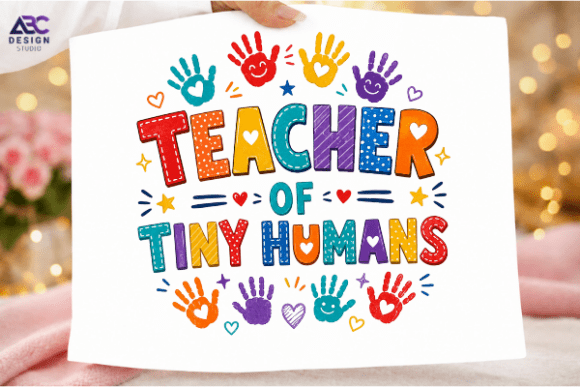
What sets this specific digital asset apart is its sophisticated typographic arrangement. The design does not rely on a single font but rather constructs a narrative through texture and pattern. The words TEACHING and TINY HUMANS are separated by a central OF, creating a balanced, multi-tiered hierarchy that guides the eye naturally across the composition. Each character is treated as a canvas in itself, featuring an eclectic mix of hand-drawn textures that mimic the imperfections and charm of actual human creation.
- Playful Polka Dots: These add a layer of whimsy, echoing the patterns often found in classroom decor and children’s books.
- Clean Vertical Stripes: Providing structure and rhythm, these lines prevent the design from becoming too visually cluttered.
- Whimsical Faux-Stitch Outlines: The dashed outlines simulate embroidery, giving the digital file a tactile, stitched appearance that suggests durability and care.
- Sweet White Heart Cutouts: Integrated within the letters, these negative-space details add depth and reinforce the theme of love and care inherent in teaching.
This patchwork doodle style is highly relevant because it mirrors the diverse and multifaceted nature of a classroom environment. Just as a teacher must juggle various subjects, personalities, and activities, the design juxtaposes different visual elements to create a cohesive whole. For entrepreneurs and boutique owners, this complexity adds perceived value, making the final product appear premium and thoughtfully designed.
Visual Impact and Color Psychology
Color plays a critical role in the effectiveness of any graphic, especially one intended for apparel. The Teacher of Tiny Humans Handprint Doodle utilizes a multicolored bright palette bursting with rich red, warm orange, sunny yellow, vivid teal, royal blue, and deep purple. This selection is not arbitrary; it is engineered for maximum visibility and emotional impact.
In the context of back-to-school season, high-contrast colors serve a practical purpose. They stand out against the typically neutral backgrounds of school hallways, playgrounds, and office spaces. Furthermore, these colors are explicitly optimized to pop flawlessly against popular garment blanks such as white, cream, sand, oatmeal, heather grey, and light pastels. This versatility ensures that the design remains vibrant regardless of the base color chosen by the manufacturer or retailer.
The use of bright, saturated hues also triggers positive psychological associations. Yellow evokes optimism and energy, while blue conveys trust and stability. By combining these with the warmth of orange and red, the design creates an energetic and welcoming rhythm. This is particularly important in early education environments, where the goal is to reduce anxiety and foster a sense of safety and excitement among young learners.
The Symbolism of Handprints and Accents
At the core of this design is the circular scattering of colorful children’s handprints. Handprints are a universal symbol in early childhood education, representing growth, individuality, and the physical presence of the child. By detailing these handprints with adorable smiley faces and heart cutouts inside the palms, the design elevates them from simple imprints to expressive characters. This addition injects a level of personality and humor that resonates deeply with both teachers and parents.
Surrounding the text and handprints are whimsical accent lines, primitive stars, and miniature floating hearts. These elements frame the composition, creating a sense of movement and celebration. They suggest that teaching is not just a job but a festive, dynamic experience. For designers and marketers, these accents provide additional visual interest that encourages closer inspection, allowing the viewer to discover new details upon repeated viewing. This "hidden detail" strategy is effective in driving engagement and word-of-mouth promotion, as customers share what they notice on social media platforms.
Strategic Applications for Creators and Businesses
For professionals in the print-on-demand space, boutique fashion brands, and independent creators, the Teacher of Tiny Humans Handprint Doodle offers significant commercial potential. Its engineering specifically targets the massive seasonal demand for back-to-school apparel and teacher appreciation gifts. Understanding the lifecycle of educational retail is key to maximizing sales.
- Back-to-School Season: Teachers often purchase new outfits or accessories at the start of the year to signal a fresh beginning. This design’s cheerful tone makes it ideal for launch campaigns in late July and August.
- Teacher Appreciation Week: As a gift item, the design’s emphasis on "Tiny Humans" highlights the unique bond between educator and student. Products featuring this art can be marketed as heartfelt tributes from parents and students.
- Boutique Fashion Markets: Early childhood educators often prefer clothing that reflects their creative field. Boutique stores catering to this demographic will find this design appealing due to its artistic complexity and lack of restrictive brand keywords, allowing for broad commercial use.
Furthermore, the design’s compatibility with various garment types—from t-shirts and hoodies to tote bags and aprons—expands its utility. Aprons, in particular, are popular among teachers who engage in hands-on arts and crafts. The durable aesthetic of the faux-stitch outlines complements the practical nature of an apron, suggesting that the wearer is ready for creative messiness.
Optimizing for Modern Workflows
In today’s fast-paced digital marketplace, efficiency is paramount. The Teacher of Tiny Humans Handprint Doodle is provided as a premium commercial digital asset, meaning it is free of restricted brand keywords and ready for immediate integration into production workflows. This eliminates legal hurdles and allows creators to focus on marketing and distribution rather than licensing negotiations.
Modern consumers expect quick turnaround times and personalized options. By utilizing high-quality digital assets like this one, businesses can offer a wide range of products without the need for extensive custom design work for each SKU. The design’s scalability ensures that it looks crisp whether printed on a small sticker or a large banner, maintaining its integrity across different mediums. This flexibility supports agile business models, enabling sellers to test multiple product categories and adjust inventory based on real-time feedback.
Conclusion: Embracing the Joy of Teaching
The Teacher of Tiny Humans Handprint Doodle is more than a decorative element; it is a celebration of the early education profession. It acknowledges the hard work, creativity, and emotional investment required to teach "tiny humans." By combining bold typography, textured patterns, and symbolic imagery, the design creates a visual language that is both professional and profoundly human.
For educators, wearing or gifting this design is a way to connect with their community and express pride in their role. For creators and businesses, it represents an opportunity to meet the evolving demands of a market that values authenticity, color, and meaningful symbolism. As the landscape of educational apparel continues to shift towards more expressive and personalized styles, assets like this one will remain essential tools for capturing the spirit of the school year. Whether used for a solo teacher’s wardrobe or a bulk order for a school-wide initiative, the design delivers ultimate high-contrast energy and cheerful classroom excitement, ensuring that the joy of teaching is visible, vibrant, and celebrated.